
How Automated KYC Verification Actually Works at LTI
KYC verification is required before you can trade with LTI, not optional. Here's how the automated process works and how fast it can be.
By LTI BLOG Team · Updated
How Automated KYC Verification Actually Works at LTI
Automated KYC verification at LTI checks the ID and proof of address you upload against a series of automated checks, and in most cases confirms your identity within minutes rather than after a review process that used to take several days industry wide. It's the step every account holder goes through before they can fund an account or place a trade, and it applies whether you're opening your first account or your fifth.
This isn't a formality LTI added on its own. It's a compliance obligation tied to how the business is structured and how it operates, and it's one of the most common questions new traders ask before they submit their documents. Here's what actually happens, in plain terms.
Key Takeaways: • KYC verification confirms your identity before you can fund an account or place a trade, and it applies to every account holder without exception. • Two document types typically cover most checks: a photo ID issued by a government authority and a recent proof of address. • A clear, matching submission is often confirmed within minutes through automated checks; cases that need closer review move to a manual queue, which generally takes hours rather than minutes. • Blurry scans, mismatched names across documents, and outdated proof of address are the most common reasons verification takes longer than expected. • Documents should only ever be submitted through the official LTI client portal or a verified support channel you contacted first, never in response to an unsolicited message.
Risk disclosure: Trading in foreign exchange (forex), contracts for difference (CFDs), and other leveraged financial instruments involves a high degree of risk and may not be appropriate for all investors. You should only trade with funds that you can afford to lose without adversely affecting your financial position.
Why Brokers Are Required to Verify Your Identity
Identity verification exists because financial regulators require it, not because brokers enjoy collecting paperwork. Rules against money laundering, generally known as AML rules, mean firms handling client funds have to confirm who they're dealing with before money moves through an account. The same checks also help prevent identity theft and account takeover, since a verified account is much harder for someone other than the account holder to open or control.
London Trading Index Limited (Saint Vincent and the Grenadines, registration No. 25630) is the entity that provides the trading service, and it is not regulated. A separate entity, Equivest (Mauritius) Limited (registration GB24203378), holds an Investment Dealer licence (No. 00321997) from the Financial Services Commission of Mauritius, but that status applies only to Equivest. It does not extend to London Trading Index Limited, this website, or the trading business. Identity checks at LTI, like at any brokerage, follow standard AML practice regardless of which entity in a group holds a given licence.
This is generally the same reason banks ask for ID when you open a current account. The industry term for it is Know Your Customer, or KYC, and it's a standard part of onboarding across regulated financial services, not something specific to trading. You'll go through this same process no matter which LTI account type you eventually choose.
What Documents You'll Need to Provide
Two categories of documents typically cover most KYC checks: proof of identity and proof of address. Proof of ID is usually a passport, national identity card, or driving licence issued by a government authority, something with your photo, full name, and date of birth clearly visible.
Proof of address tends to be a recent utility bill, bank statement, or official government correspondence showing your name and current residential address. Documents are usually only accepted if they're recent, so it's worth checking that whatever you upload isn't several months out of date. The name on both documents should match exactly, or as closely as possible, since a mismatch is one of the most common reasons a case gets sent for a closer look.
Clear, legible scans or photos matter more than most people expect. A document that's blurry, cropped, or has glare across the text is one of the most common reasons a check takes longer than it needs to. Photographing the full document on a flat, well lit surface, rather than cropping it tightly or photographing it at an angle, avoids most of these issues before they happen.
How Automated Verification Works in Minutes
Once you upload your documents, LTI's system runs a series of automated checks against the information you've provided, comparing the details on the document with what's on your account application. This includes confirming that the name, date of birth, and address details are consistent across the documents and the application form, and checking that the document itself appears to be a genuine, unaltered original. When everything matches and the document images are clear, this process can complete within minutes.
That speed is the point of automating the check rather than routing every submission straight to a human reviewer. Automated systems apply the same standard consistently to every submission and don't get slower as volume increases, which removes the waiting period that used to be standard across the industry, where document review could take days regardless of how straightforward the submission was.
It's worth being clear that within minutes describes typical cases with clear documents, not a guarantee that applies to every submission. Some accounts will need a closer look, and that's normal.
Why Some Accounts Need Manual Review
Manual review usually gets triggered by something the automated system can't resolve on its own. A name that doesn't quite match across documents, an address format the system can't parse, a document that's expired, or an image where a key detail is obscured are common triggers. None of these on their own suggest anything wrong with the account holder. They simply fall outside what an automated match can confirm with confidence.
In these cases, a member of the compliance team reviews the submission directly, which can take longer than the automated path, generally hours rather than minutes, depending on the volume of cases being handled and how straightforward the resolution is. This isn't a penalty or a red flag against the account holder. It's simply the process working as intended when a case falls outside what automation can confirm on its own.
If your verification does move to manual review, LTI's support team is generally able to tell you what's needed to move things along, rather than leaving you to guess.
How to Avoid Verification Delays
A few habits make it much more likely your documents clear on the first pass:
- Use a document that's still valid, not one that expired recently or is close to its expiry date.
- Photograph or scan the whole document on a flat surface with even lighting, avoiding glare, shadows, and cropped edges.
- Make sure the name you enter on your account application matches your ID exactly, including middle names and spelling.
- Submit a proof of address that's recent and shows your full name and current residential address clearly, not a document addressed to someone else in the household.
- Upload documents in one attempt rather than piecemeal, since resubmissions can add extra review time.
None of these guarantee an instant result, since some cases still need a closer look regardless of document quality, but they remove the most common reasons a straightforward case ends up taking longer than expected.
What Happens Once You're Verified
Once your identity is confirmed, your account is generally cleared to deposit funds and start trading on MT5 without further document requests, unless something later changes, such as a new address or an update to a payment method that itself needs verifying. You can review funding options and processing details on the deposits and withdrawals page once you're ready to add funds.
Verification requirements are the same regardless of which account type you choose. Whether you open a Core account with a $50 minimum or an ECN account with a $500 minimum, the identity check happens once, at account level, not per account type.
Support is available 24/5 through real people rather than an automated queue, and WhatsApp support is available for account holders who prefer messaging over email or phone. If a question comes up after verification, whether about funding, platform access, or anything else, that's the channel to use.
LTI has supported traders in this way since 2019, and today works with more than 5,000 active traders across 120+ countries, subject to regional restrictions in places where local law prohibits the service, including Iran, North Korea, and Myanmar, and to the requirement that account holders are 18 or older.
Where to Get Help or Ask Questions
If any part of the verification process is unclear, or a document has been rejected without an obvious reason, the most direct route is to ask rather than resubmit blindly. London Trading Index's support team can generally explain exactly what's needed for a specific case, which tends to resolve things faster than guessing at what went wrong. You can reach the team through the Get in Touch page or through the client help desk.
Only ever submit your ID or proof of address through your official LTI account portal or a verified support channel you initiated contact with. Legitimate verification requests never arrive as unsolicited messages asking you to send documents by email or social media, and treating any such request with suspicion is a reasonable default.
Frequently Asked Questions
Is KYC verification mandatory to trade with LTI?
Yes. You generally can't fund an account or place trades until your identity has been verified, in line with standard AML compliance practice.
How long does automated KYC verification usually take?
Generally minutes, when the documents you upload are clear, current, and match the details on your application. Cases that move to manual review can take longer, typically hours rather than minutes.
What should I do if my verification documents are rejected?
Check that the document is current, legible, and shows the required details clearly, then resubmit through your account portal. If it's rejected again, contacting support directly is usually faster than guessing at the cause.
How do I know a document request is genuinely from LTI?
Genuine requests come through your official account portal or a support channel you contacted first. If a message asking for your ID or proof of address arrives out of nowhere by email or social media, treat it as suspicious and confirm through the client help desk before responding.
If you haven't opened an account yet, you can start the process through LTI's registration page; verification happens early in that flow, which is exactly why it's worth knowing what to expect before you begin.
*This article is general information about CFDs, leveraged products and instruments, and trading. It is not investment advice, a recommendation, or an offer to trade, and it does not take account of your objectives, financial situation or needs. Refer to the footer for the full disclaimer, terms and policies.
Related Articles
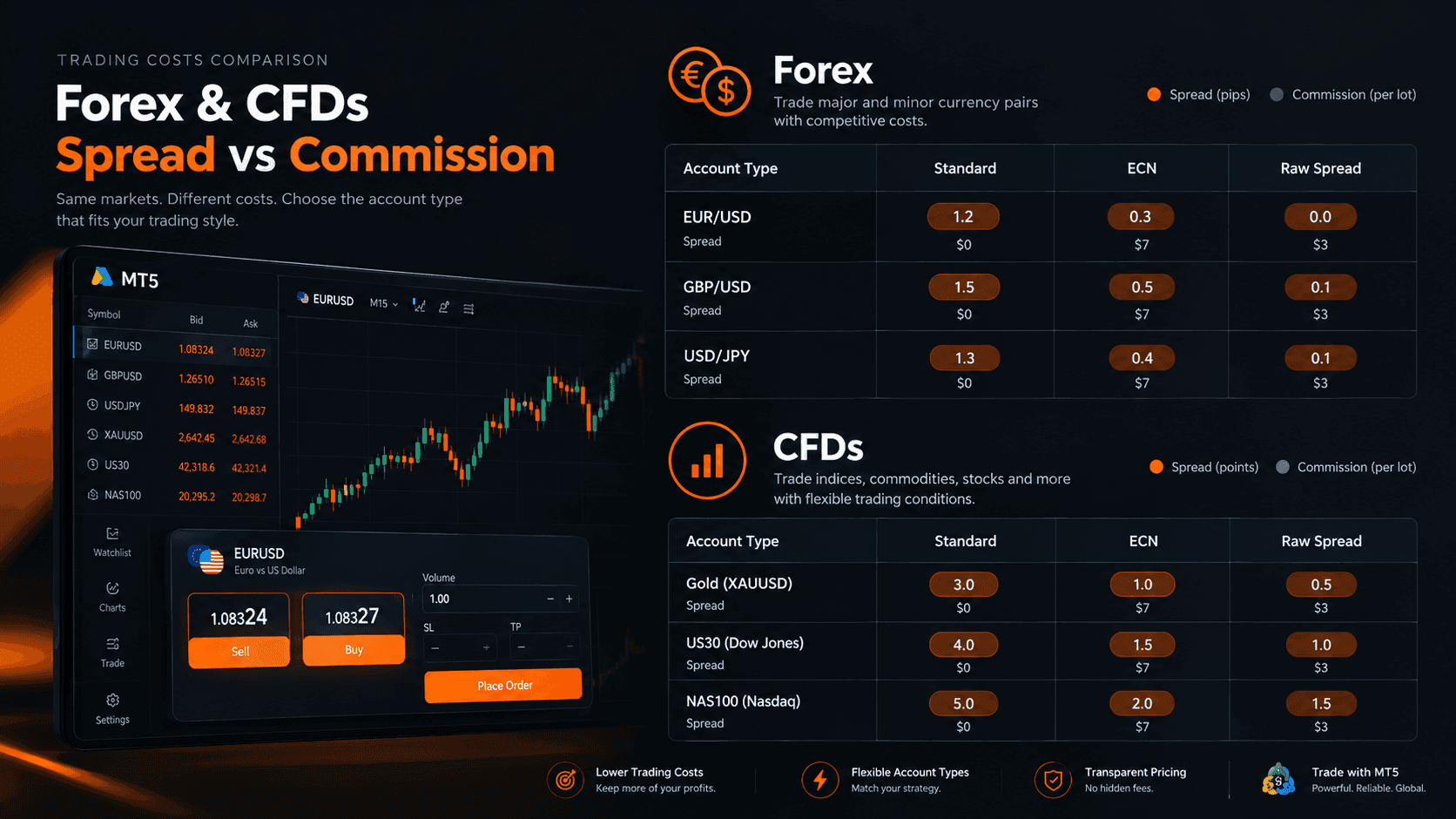
Forex and CFD Spreads vs Commissions: What They Really Cost You
A tight spread can still cost more once commission is added in. Here's how to compare total cost per trade instead of judging each fee alone.
Read Article
Copy Trading, PAMM, and MAM: What's the Difference?
Copy trading, PAMM, and MAM handle risk differently. Here's what actually separates the three account structures.
Read Article
The Broker MCP Race: Every Broker and Prop Firm That Has Opened Up to AI Agents
A dated tracker of every forex and CFD broker, prop firm, and platform vendor that has shipped MCP or AI agent support as of September 2026, including where LTI's own MT5 integration fits in.
Read ArticleCreate Your Account
Account opening happens in the client area, and takes a couple of minutes.
*Opening an account finishes in the secure client area, where these details carry across. Already registered? Sign in, or talk to us first.
CFDs are complex instruments and come with a high risk of losing money rapidly due to leverage. 73% of retail investor accounts lose money when trading CFDs. You should consider whether you can afford to take the high risk of losing your money.